Wednesday, February 12, 2020

Evolution of banks

Listen while you read...
The rich had lots of gold and were able to buy with their gold whatever they wanted to buy. 
For example, they used some gold to buy a year supply of bread from the baker. 
The baker then gave a piece of his piece of gold to the miller for a year's supply of flour. 
The miller gave some of his gold to the farmer for a year's supply of wheat. 
The farmer was then able to buy his ploughs, shovels and horseshoes needed for his farming from the blacksmith. 

Eventually the miner got some of this gold for selling the iron ore that he mined. 
With this gold, the baker, miller, farmer, blacksmith and miner were all able to pay the carpenters for building their houses and 
the shoe makers and tailors for making their shoes and clothes. Carpenters, shoemakers and tailors were also able to pay the tanners, weavers and lumberjacks for leather, cloth and wood they needed to make their products. 
Most of the gold eventually returned back to the rich in the form of taxes that were paid by everyone for paying soldiers to ensure that the economy ran smoothly and securely. 
In order to protect gold from being stolen, the rich paid people called "bankers" to store it for them. The bankers felt good about what they were doing. They were helping circulate wealth from where it was, from the rich, to where it needed to be, to the poor. 
The bankers gave out receipts that were used by the rich to retrieve their gold whenever they needed some for buying something. Some rich people started to pay for the things that they bought with their receipts to make it more convenient for all concerned. People adopted the idea of using these receipts to buy things with instead of using the actual gold. 
The banks, seeing that their receipts moved around much more and easier than the gold they were guarding, they started to print more receipts for gold than they had gold. They put pictures of their kings on these receipts and called them "money". The kings liked this idea very much and so did the banks. 


The banksters eventually got out of the business of storing gold and got into the business of printing money. They realized that with money they can enslave people easier than with whips and chains.


They build schools to indoctrinate children. They were put in "kindergartens" at a very early age to be cultivated and prepared for schools for the next 13 years to be trained as obedient and useful slaves. The rich used mass media to brainwash the slaves to be complacent. Hundreds of entertainment channels were made freely available for them to passively watch. 
  • They built the slaves factories to work in and to earn money to put into the banks for the rich to borrow. 
  • They built the slaves trains and gave them work to dig coal mines to make the trains run and to carry them to new lands to exploit. 
  • They built the slaves roads and sold them cars and gave them work to dig oil mines to make their cars run. 
                          
And the slaves rejoiced and felt free as they drove around and crashed into each other killing and injuring themselves. 

Once they had the people enslaved, the bansters financed "politicians" that the slaves elected, believing that the politicians would represent their interests. 
They got the military industrial complex and the politicians together, and brainwashed the people to chose security over freedom. Then they developed technologies that were tested out in war.
Great profits were made in selling weapons to destroy, and equipment and materials to rebuild. The thankful survivors were then given the technologies developed for the wars. In time the people forgot and began to feel that the war was all worth it.
To increase profits, the banksters started to gamble with money.  Whenever they made bad speculative investments and ended up losing their investments, they convinced the governments that they were too important to be allowed to fail and got bailed out. The governments just asked the banks to print more and more money to pay for their ever increasing debts. The governments fell deeper and deeper in debt to the banksters. In time the governments became as well enslaved to the banks.  
Then fortunately some very clever slaves devised a system of finance that did not need banks and their banksters at all. They used theories of mathematics dealing with cryptology that allowed numbers to be coded in such a way as to make it impossible to break the code and falsify. 
They used the computer technology along with the internet that allowed world-wide communications possible between any computers. They used peer to peer technology that allowed all computers to become bookkeepers of money transactions so that in the end no one bookkeeper was able to falsify the books. Using mathematics, computers and the internet, they wrote a protocol for decentralized digital money to be transferred as easily as messages in an email. 
Just like email revolutionized the sending and receiving of mail to make it easy, fast, secure and cheap, the new protocol they called "Bitcoin" revolutionized the sending and receiving of money to make it easy, fast, secure and cheap. This allowed people to become their own banks. The slaves were finally freed from their dependence on banks and the banksters. 

THE END
For more, please CLICK HERE
please leave a COMMENT and SHARE  using the buttons below

Evolution of money

Listen while you read...
5,000 years ago, communities were small in size. They were very far apart and they had very few people in them. If you needed to trade anything you had for something you wanted, you had to find people in your community who had what you wanted and wanted what you had. 
There were no constraints in what you used to barter with. 

As the communities grew in size, in numbers and in population, bartering got easier. 
You could trade with people even if they did not want or need what you had to trade with. All you had to do was convince them that there were many other people who would eventually want or need what you had, as long as it could be stored without going bad and losing its value and it could be easily transported to the other communities which could be far away. 
Any commodity that was in high demand, like sea shells, herbs and salt, were used to barter with. 
Eventually gold, despite its many disadvantages, became the commodity of choice for bartering. Gold was difficult to divide into very small pieces needed to buy inexpensive items with. It was easy to cheat because the scales used to weigh the small pieces of gold were much too unreliable and inaccurate. It was also insecure because it was too easy to steal. 
Some very clever people called kings realized that gold was very soft and they could cut out small round pieces and stamp their head on it and use it as a barter. 
Once gold items became expensive, some very clever people called bankers realized that they could offer to securely store them for the people and at the same time print receipts for them guaranteeing that they could be redeemed on demand at any time by anyone. People began to use these receipts as a medium of bartering instead of using actual gold items. The receipts became known as "money".

As bankers were very beneficial to society allowing them to conveniently, easily, securely and efficiently trade, people developed a trust and respect for them. Bankers abused this trust and exploited this respect by printing receipts for gold that they did not actually have. They evolved from helping society to helping themselves. 

Some used tally sticks instead of paper receipts to fight against counterfeiting. Sticks were engraved with notches and split in half along their grain to make it impossible to counterfeit. They stored the halves of the split Talley sticks and allowed the other halves to be circulated and used as money. All that was necessary was to trust the person from whom you got your tally stick that they themselves got it from a trusted person and that the sticks had corresponding matching halves as proof that they were not counterfeited. 

The bankers eventually got so greedy that they stopped storing gold and concentrated on the much more lucrative business of storing and printing receipts based on trust only. 
They called their new money "fiat money" and printed as much of it as was needed for trade. Bankers became banksters. 
Because they printed more fiat money than was needed for trade, they used their newly acquired power and their resulting corruption to promote expensive wars that used this excess money to destroy entire cities and then to rebuild them. The banksters eventually got so wealthy and powerful that they began to be regarded as not only too big to fail, but also too big to nail and jail. 

Technology eventually developed to a point where "virtual reality" started to replace reality itself. The world shrank and once more became like the small communities found 5,000 years ago. 
Some very clever people called mathematicians and computer programmers realized that they could exploit the power of the worldwide network of computers called the "internet" to invent a new form of virtual money called "Bitcoin" that had all the necessary attributes that ideal money must have. 
It was impossible to counterfeit and was easy to store and transport securely for as long and as far as needed; anywhere at any time to anyone. It was easy to divide in as small amounts as needed. It allowed anyone to be a bookkeeper to record all Bitcoin transactions. The ledger of all transactions was kept by so many volunteer bookkeepers that it became impossible for any one bookkeeper to falsify it. The amount of Bitcoin issued was defined by a protocol that could not be changed by greedy banksters. For the first time, the control of the people's money was decentralized and freed from the control of the greedy and corrupt banksters. 
The people were finally able to be their own banks and recaptured the control of bartering that they had 5,000 years ago. They bartered with Bitcoin.
THE END
For more, please CLICK HERE
please leave a COMMENT and SHARE  using the buttons below

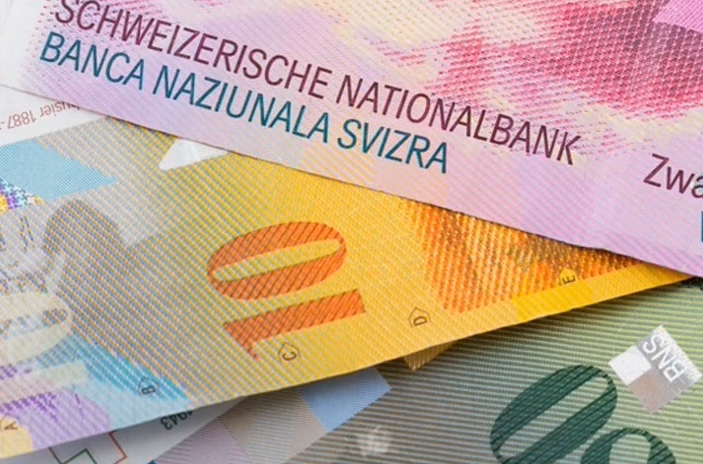
Swiss National Bank


Listen while you read...
Switzerland has a stable, prosperous and high-tech economy and enjoys great wealth. It is ranked as one of the wealthiest and most competitive and innovative economies in the world. One main reason for this is that it stays out of fighting expensive wars and keeps doing business with both sides fighting. With its overwhelmingly private sector economy and low tax rates, Switzerland is home to several large multinational corporations. Foreigners make up over 20% of the population.
About 60% of Switzerland is covered with forests, lakes and mountains. Since Switzerland has no mineral resources, it must import, process and resell them as products. Switzerland exports 3 times more than it imports. 60% of the exported goods and 80% of the imported goods go to and come from the European Union (EU).
About 40% of the Swiss are employed in industries dealing with pharma, machines, metals, watches and high quality and precision products which are mostly exported. Swiss exporters suffer many disadvantages not belonging to the EU and having an expensive Swiss Franc. Their advantage is in their reputation for providing products and services that are of high quality and reliable. More than 50% of the Swiss are employed in providing services in banking, insurances and tourism. Switzerland has an unemployment rate of only a few percent. Less than 10% of the population is employed in agriculture which is strongly supported and subsidized by the government. The production of the Swiss farmers does not fulfill the needs of all people, so Switzerland must rely on imported foods.
Despite all this wealth, less than 40% of Swiss owe their own homes. This is because greedy banks have lobbied politicians to offer tax benefits to those with mortgage debts and to burden house owners who are free of mortgage debts with a high tax rate. 
The central bank of Switzerland, called the SNB, the bank of all the greedy banks, fortunately seems to be wiser and less greedy.
The SNB is responsible for Swiss monetary policy and for issuing Swiss franc banknotes called CHFs. The SNB is a corporation owned by shareholders, and traded on the stock market under special regulation. About 55% of its shares are owned by public institutions like cantons and cantonal banks. The remaining shares are traded on the stock market. They are mostly owned by private individuals. SNB is mandated to ensure that there is stability in a free market which is often disrupted by greedy money speculators.

Listen while you read...
The creation of money, the Swiss example:
When businesses need more money than they have for growth, they issue stocks that represent ownership of part of the businesses. People and commercial banks invest by buying these stocks. The prices of stocks rise or fall depending on whether the businesses make a profit or a loss.
Governments work like businesses but instead of "stocks", they use "bonds". When a government needs more money than can be collected by taxes to spend on public works, it issues bonds which promise a guaranteed interest payment to the buyers – the people, businesses, commercial banks and central banks of foreign countries.

When the government needs even more money to fight natural disasters and wars, it sells these bonds to its own central bank as a last resort who buys them by printing the money. 
The role of the central bank is to ensure that there is enough money circulating in the country to keep prices stable. Too much money means that its value is diluted and its buying power is reduced. This inflates the price of products and services making them expensive.

There are many examples of countries that due to extreme conditions such as war can find themselves in a ridiculous hyperinflation spiral where prices double every day. If a country can not finance projects vital to national survival by collecting taxes, they are forced to print money. This sudden excess of money can result in too much money chasing after too few goods. When foreign countries sense the rising inflation, manufacturers find that their raw products rapidly increase due to the rapidly cheapening of their currency. Their products become more expensive. This price increase can rapidly spiral out of control causing the price of goods to skyrocket. To keep the economy running, the government is forced to raise salaries by printing more money. This exasperates the inflation into hyperinflation which can result in the price of goods doubling every day. If this is continued, the government is forced to print money with higher and higher denominations, adding zeros until there is no more space for the zeros. Those who have saved their old bills soon find them worthless. Like children who have saved up their pennies, they are soon forced to cart them with a wheel barrow to by a loaf of bread. 
Too little money has the opposite effect, causing prices to drop. Central banks regulate the circulation of money by controlling interest rates. Depending on whether the interest rates are low or high, more or less people borrow. Central banks can also protect the country's money from foreign speculators by intervening in money markets. They can support their trading partner's weak currency should it lose value due to speculation by pegging it to their own strong currency and printing as much as is needed to keep the low value.
When speculators were searching for a safe haven for their wealth, they bid up the price of CHFs causing Swiss imports to be cheaper to buy and exports to be more expensive to sell. This greatly disrupted the economy and threatened Swiss producers by making it too difficult for them to compete. 
SNB came to the rescue. They pegged the strong CHF to the weak Euro to prop it up and to give tourist businesses and exporters enough time to adapt their businesses to the faltering Euro. This would give them and the Swiss commercial banks time to get rid of their accumulated Euros that were otherwise going to lose their value and ruin their businesses.


SNB printed  “cheap” Swiss Francs for over 3 years to hungry speculators who wanted to trade their falling Euros with attractive Swiss Francs, in order to have a safe haven for their wealth. 


If SNB would not have intervened, the market would have made the CHF very expensive making imports expensive to buy, and exports and services, cheap and easy to sell. It would make Switzerland a cheap land to visit, and like a poor country, dependent on tourism. 


By guaranteeing to sell CHFs  at a lower price, exchanging strong and expensive CHFs that people wanted for weak and cheap Euros that no one wanted, the SNB accumulated a vault full of Euros and protected the CHF from the whims of speculators.


When SNB felt that the European Central Bank was going to flood the market with Euros, to make their exports cheaper and their tourist industry more attractive, Switzerland had no other choice but to unpeg their Swiss Francs from the weakening Euro.


Central banks are supposed to be independent from the governments that they support. But when they are threatened by global speculators and foreign central banks who wreak havoc to their country's economy, governments should step in and protect their economies with subsidies, tariffs and duty taxes for cross-border shoppers looking for bargains at the expense of local stores.
 
At the present, the EU is after the CHF. Thanks to the wisdom of SNB, the CHF can be saved. In the future, the EU, if it survives, will be after Switzerland's clean water. Hopefully Switzerland will be as accommodating as SNB is by selling as many bottles of water that it takes to satisfy the thirst of the EU, at a fair fixed stable price.
THE END
For more, please CLICK HERE
please leave a COMMENT and SHARE  using the buttons below

Gold to Fiat to Bitcoin

  Gold mining significantly alters the environment causing deforestation and other impacts, particularly in aquatic systems with residual cy...