Wednesday, March 25, 2020

Evolution of money (small)

5,000 years ago, communities were small in size. They were very far apart and they had very few people in them. If you needed to trade anything you had for something you wanted, you had to find people in your community who had what you wanted and wanted what you had.

There were no constraints in what you used to barter with.

As the communities grew in size, in numbers and in population, bartering got easier.

You could trade with people even if they did not want or need what you had to trade with. All you had to do was convince them that there were many other people who would eventually want or need what you had, as long as it could be stored without going bad and losing its value and it could be easily transported to the other communities which could be far away.

Any commodity that was in high demand, like sea shells, herbs and salt, were used to barter with.

Eventually gold, despite its many disadvantages, became the commodity of choice for bartering. Gold was difficult to divide into very small pieces needed to buy inexpensive items with. It was easy to cheat because the scales used to weigh the small pieces of gold were much too unreliable and inaccurate. It was also insecure because it was too easy to steal.

Some very clever people called kings realized that gold was very soft and they could cut out small round pieces and stamp their head on it and use it as a barter.

Once gold items became expensive, some very clever people called bankers realized that they could offer to securely store them for the people and at the same time print receipts for them guaranteeing that they could be redeemed on demand at any time by anyone. People began to use these receipts as a medium of bartering instead of using actual gold items. The receipts became known as "money".


As bankers were very beneficial to society allowing them to conveniently, easily, securely and efficiently trade, people developed a trust and respect for them. Bankers abused this trust and exploited this respect by printing receipts for gold that they did not actually have. They evolved from helping society to helping themselves.

Some used tally sticks instead of paper receipts to fight against counterfeiting. Sticks were engraved with notches and split in half along their grain to make it impossible to counterfeit. They stored the halves of the split Talley sticks and allowed the other halves to be circulated and used as money. All that was necessary was to trust the person from whom you got your tally stick that they themselves got it from a trusted person and that the sticks had corresponding matching halves as proof that they were not counterfeited.

The bankers eventually got so greedy that they stopped storing gold and concentrated on the much more lucrative business of storing and printing receipts based on trust only.

They called their new money "fiat money" and printed as much of it as was needed for trade. Bankers became banksters.

Because they printed more fiat money than was needed for trade, they used their newly acquired power and their resulting corruption to promote expensive wars that used this excess money to destroy entire cities and then to rebuild them. The banksters eventually got so wealthy and powerful that they began to be regarded as not only too big to fail, but also too big to nail and jail.

Technology eventually developed to a point where "virtual reality" started to replace reality itself. The world shrank and once more became like the small communities found 5,000 years ago.

Some very clever people called mathematicians and computer programmers realized that they could exploit the power of the worldwide network of computers called the "internet" to invent a new form of virtual money called "Bitcoin" that had all the necessary attributes that ideal money must have.

It was impossible to counterfeit and was easy to store and transport securely for as long and as far as needed; anywhere at any time to anyone. It was easy to divide in as small amounts as needed. It allowed anyone to be a bookkeeper to record all Bitcoin transactions. The ledger of all transactions was kept by so many volunteer bookkeepers that it became impossible for any one bookkeeper to falsify it. The amount of Bitcoin issued was defined by a protocol that could not be changed by greedy banksters. For the first time, the control of the people's money was decentralized and freed from the control of the greedy and corrupt banksters.

The people were finally able to be their own banks and recaptured the control of bartering that they had 5,000 years ago. They bartered with Bitcoin.
THE END
For more, please CLICK HERE
please leave a COMMENT and SHARE  using the buttons below

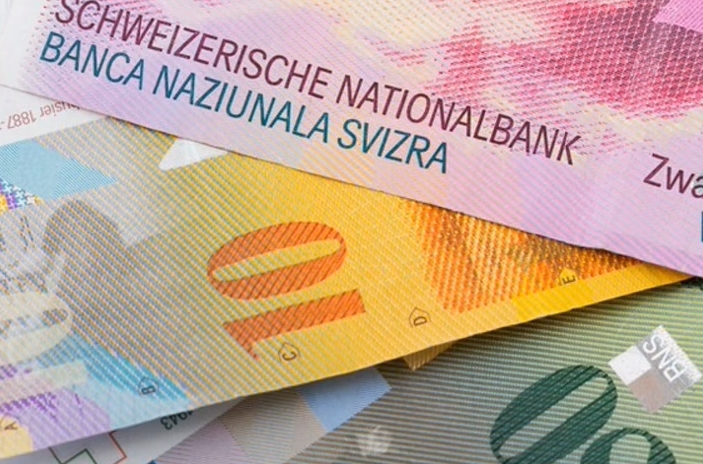
Swiss National Bank (small)

Switzerland has a stable, prosperous and high-tech economy and enjoys great wealth. It is ranked as one of the wealthiest and most competitive and innovative economies in the world. One main reason for this is that it stays out of fighting expensive wars and keeps doing business with both sides fighting. With its overwhelmingly private sector economy and low tax rates, Switzerland is home to several large multinational corporations. Foreigners make up over 20% of the population.

About 60% of Switzerland is covered with forests, lakes and mountains. Since Switzerland has no mineral resources, it must import, process and resell them as products. Switzerland exports 3 times more than it imports. 60% of the exported goods and 80% of the imported goods go to and come from the European Union (EU).

About 40% of the Swiss are employed in industries dealing with pharma, machines, metals, watches and high quality and precision products which are mostly exported. Swiss exporters suffer many disadvantages not belonging to the EU and having an expensive Swiss Franc. Their advantage is in their reputation for providing products and services that are of high quality and reliable. More than 50% of the Swiss are employed in providing services in banking, insurances and tourism. Switzerland has an unemployment rate of only a few percent. Less than 10% of the population is employed in agriculture which is strongly supported and subsidized by the government. The production of the Swiss farmers does not fulfill the needs of all people, so Switzerland must rely on imported foods.

Despite all this wealth, less than 40% of Swiss owe their own homes. This is because greedy banks have lobbied politicians to offer tax benefits to those with mortgage debts and to burden house owners who are free of mortgage debts with a high tax rate.

The central bank of Switzerland, called the SNB, the bank of all the greedy banks, fortunately seems to be wiser and less greedy.

The SNB is responsible for Swiss monetary policy and for issuing Swiss franc banknotes called CHFs. The SNB is a corporation owned by shareholders, and traded on the stock market under special regulation. About 55% of its shares are owned by public institutions like cantons and cantonal banks. The remaining shares are traded on the stock market. They are mostly owned by private individuals. SNB is mandated to ensure that there is stability in a free market which is often disrupted by greedy money speculators.

The creation of money, the Swiss example:

When businesses need more money than they have for growth, they issue stocks that represent ownership of part of the businesses. People and commercial banks invest by buying these stocks. The prices of stocks rise or fall depending on whether the businesses make a profit or a loss.

Governments work like businesses but instead of "stocks", they use "bonds". When a government needs more money than can be collected by taxes to spend on public works, it issues bonds which promise a guaranteed interest payment to the buyers – the people, businesses, commercial banks and central banks of foreign countries.

When the government needs even more money to fight natural disasters and wars, it sells these bonds to its own central bank as a last resort who buys them by printing the money.

The role of the central bank is to ensure that there is enough money circulating in the country to keep prices stable. Too much money means that its value is diluted and its buying power is reduced. This inflates the price of products and services making them expensive.

There are many examples of countries that due to extreme conditions such as war can find themselves in a ridiculous hyperinflation spiral where prices double every day. If a country can not finance projects vital to national survival by collecting taxes, they are forced to print money. This sudden excess of money can result in too much money chasing after too few goods. When foreign countries sense the rising inflation, manufacturers find that their raw products rapidly increase due to the rapidly cheapening of their currency. Their products become more expensive. This price increase can rapidly spiral out of control causing the price of goods to skyrocket. To keep the economy running, the government is forced to raise salaries by printing more money. This exasperates the inflation into hyperinflation which can result in the price of goods doubling every day. If this is continued, the government is forced to print money with higher and higher denominations, adding zeros until there is no more space for the zeros. Those who have saved their old bills soon find them worthless. Like children who have saved up their pennies, they are soon forced to cart them with a wheel barrow to by a loaf of bread.

Too little money has the opposite effect, causing prices to drop. Central banks regulate the circulation of money by controlling interest rates. Depending on whether the interest rates are low or high, more or less people borrow. Central banks can also protect the country's money from foreign speculators by intervening in money markets. They can support their trading partner's weak currency should it lose value due to speculation by pegging it to their own strong currency and printing as much as is needed to keep the low value.

When speculators were searching for a safe haven for their wealth, they bid up the price of CHFs causing Swiss imports to be cheaper to buy and exports to be more expensive to sell. This greatly disrupted the economy and threatened Swiss producers by making it too difficult for them to compete.

SNB came to the rescue. They pegged the strong CHF to the weak Euro to prop it up and to give tourist businesses and exporters enough time to adapt their businesses to the faltering Euro. This would give them and the Swiss commercial banks time to get rid of their accumulated Euros that were otherwise going to lose their value and ruin their businesses.

SNB printed “cheap” Swiss Francs for over 3 years to hungry speculators who wanted to trade their falling Euros with attractive Swiss Francs, in order to have a safe haven for their wealth.

If SNB would not have intervened, the market would have made the CHF very expensive making imports expensive to buy, and exports and services, cheap and easy to sell. It would make Switzerland a cheap land to visit, and like a poor country, dependent on tourism.

By guaranteeing to sell CHFs at a lower price, exchanging strong and expensive CHFs that people wanted for weak and cheap Euros that no one wanted, the SNB accumulated a vault full of Euros and protected the CHF from the whims of speculators.

When SNB felt that the European Central Bank was going to flood the market with Euros, to make their exports cheaper and their tourist industry more attractive, Switzerland had no other choice but to unpeg their Swiss Francs from the weakening Euro.


Central banks are supposed to be independent from the governments that they support. But when they are threatened by global speculators and foreign central banks who wreak havoc to their country's economy, governments should step in and protect their economies with subsidies, tariffs and duty taxes for cross-border shoppers looking for bargains at the expense of local stores.


At the present, the EU is after the CHF. Thanks to the wisdom of SNB, the CHF can be saved. In the future, the EU, if it survives, will be after Switzerland's clean water. Hopefully Switzerland will be as accommodating as SNB is by selling as many bottles of water that it takes to satisfy the thirst of the EU, at a fair fixed stable price.
THE END
For more, please CLICK HERE
please leave a COMMENT and SHARE  using the buttons below

Money speculators (small)

Gambling is like drugs and it is just as addictive. There are different types of gambling for the different classes, just like there are different types of drugs for the different classes. For the poor there are lotteries which are basically voluntary taxes that pay for toys like sport stadiums for the rich. For the rich, there are the more sophisticated casinos, For the really rich, there is money speculating. All of the types of gambling, like addictive drugs, are destructive, but money speculating is the most dangerous.

When the rich speculate on the money of the poor, they wreak havoc on them like fires, floods and tornadoes. Just like with fires, floods and tornadoes, there is little that the poor can do to protect themselves.

Money speculators, consumers and money can be compared to machines, people and crops. Crops should be for people, and not for machines, otherwise people end up being hungry. Likewise, money should be for consumers and not for speculators, otherwise people end up poor. Money speculators buy the currency of other countries and hold on to it in the hopes that its value increases. Eventually the money gets dumped back to where it came from causing an unexpected flood of devalued money which plays havoc with the lives of ordinary citizens and unfairly burdens the old people, making them suddenly poorer than they were.

Countries try to curb speculation by keeping the value of their currency stable. They do this by printing as much as is needed to keep the value stable from increasing. This approach can work, but it is not the best or most efficient way for the country and for its citizens.

National banks selling their money to speculators, or fending speculators off by printing more in an attempt to keep its price stable, end up selling their good money, that is in demand, for bad money, that wants to be gotten rid of. They are not doing their country a favor if they cheapen their money to make it unattractive for speculators. If their money is in demand and becomes so expensive that it hurts their citizens in the tourist and exporting business, they could help them better by giving them tax breaks. If they want to keep their neighboring nations afloat, they could help them and themselves better by increasing imports, instead of satisfying greedy speculators. Countries with their money temporarily increasing in value because of the demand by speculators should rejoice and go on a shopping spree.

Speculators buy money and sit on it, only to sell it back when it increases in value. This is very unproductive use of money and should be prohibited. Their greedy practice of gambling with other nation’s money plays havoc on the citizens and prevents their money from being usefully used. When national banks try to fend off speculators by printing more money to keep the value of their money stable, they in effect shoot themselves in the foot because when their sold money eventually returns, it floods their country causing inflation. The people who get hurt the most are old pensioners who end up finding their only source of income - their life savings - suddenly devalued. Heavy taxes and negative interest rates on foreigners holding accounts should do the trick to fend off greedy speculators.

Unfortunately central banks of many counties run by corrupt people print money to increase their national debt and to increase their personal wealth. Citizens of all countries are stuck and squeezed between 2 corrupt extremes. On one hand, usually the left, the politicians claim to represent and protect the public and give them the illusion of free choice. On the other hand, usually the right, the private banks claim to protect the public money and give the people the illusion of freedom.

In the end both hands are controlled by a handful of secret individuals and families who are like marionette players hiding behind the stage. Their weapon of choice is money and the chains they use to keep the unaware populace bound in slavery is debt. They use fear as a method of controlling the people.

They proclaim that everyone can rise to heights that can be only imagined and dreamed of and can grow so big as to become too big to nail, fail and jail. These principles, as good as they sound, are soundless. Nature plays by rules that are very different. Whether people like it or not, or whether they want to be or not, they are a part of nature.

The laws by which nature so wisely rules are:
  • For every winner, there are many losers.
  • What goes up slowly eventually comes down fast.
  • The quieter and longer the calm lasts before the storm, the more violent the storm blows.
  • Greed is an inherent characteristic of people, and power inevitably corrupts them. The more they have, the more they want. 
  • Everything, including the tallest mountain, grows to a size that eventually becomes too big to be sustained before it breaks up into many small pieces only to grow once more. We are born naked and we end up naked when we die.
THE END
For more, please CLICK HERE
please leave a COMMENT and SHARE  using the buttons below

Money as a story (small)

What is money? Where does it come from? What will money be like in the future? This short essay addresses these points.

Money makes the world turn round. Money allows people to easily trade their skills, products and services for any other skills, products and services they need and want.

In the beginning, everyone was their own bank. Everyone had their own money which was available to the person, but very rare to every one else. Your money, called barter money, was the services or products you offered for trade. This barter system worked as long as you were able to find people who had what you needed and at the same time wanted your money. It was very difficult to find the right people to trade with. So people made products mainly only for their own needs and wants.

Some smart people invented universal barter money that was so attractive to so many people that it was widely accepted by most. This new money allowed freedom of trade for all. It was like the people had a computer network to instantly find someone to trade with. This freedom led to advancements in society unachievable otherwise.


Most people agree that money is the blood that nourishes a society and allows you to buy freedoms and comforts. But money attracts money, giving it unfair advantage that bleeds money from the many to the few until all the money is concentrated in a few hands. No one likes to play Monopoly when all the territories are taken.

There are 3 requirements required to make Monopoly a fair and fun game:

  1. 1st, all players must start with the same amount of start-up money. If you start the game with more money than the other players, you have an advantage from the start which is unfair and does not make for a fun game.
  2. 2nd, the bank can never be short of money and the money is freely available for everybody and
  3. 3rd, you can't make money directly with money. That means you can't sell or buy money or lend it out at interest.
In the real world of Monopoly that we play in our daily lives, none of the 3 requirements to make it a fair game are met.

Some people are born rich and some are born poor, the rich have a great advantage over the poor, like being born with a silver spoon in your mouth. Money is a commodity and is controlled by the banks that control how much money is given out and to whom. If banks are as well players, then eventually they end up taking over the game.

A few clever people who wanted to be rich and didn’t have any skills, services, or commodities to sell decided to sell barter money of other people. These barter money stores were called banks. Barter money had “value” if it could not be falsified and was small enough to be easily carried and used for small purchases. Finally, barter money had to last a long time and not be perishable, in case people wanted to save it for a rainy day. The more attractive your barter money was, the more it attracted people and the more value it had, and the more rich you became.

The more rich you became, the more afraid you became of losing it, and the more you hoarded your money.

Some barter money did very well.

One was sea shells used in the mountain regions far from the sea. It did well until someone found where they came from, took a long trip and came back with more than what was held by the bank. The bank lost more than half its value and no one wanted to trade for shells any more. This hoarding and speculating with barter money made an otherwise smooth running market, into a very unstable one.

In 300BC, the private teacher of Alexander the Great of Greece, Aristotle, claimed money should not be a commodity to be hoarded, but a law to be followed. He claimed money is a human right and should not be equated with wealth. Money is only a measurement of the value of products and services. Wealth is an accumulation of commodities that money buys. Accumulating money keeps money out of circulation and blocks its flows thru society.

But over the centuries, banks grew and expanded and became very wealthy. Money stayed a commodity, banks became centralized, and money trading became the most profitable business. The wealthier the banks got, the greedier they got. Greed drove people to hoard more and more money.
The rich kept getting richer and
the poor kept getting poorer.

250 years ago, when theories of the survival of the fittest were formulated and freedom from landlords was speculated, Adam Smith proposed a free market economy which was adopted by governments all over the world. He claimed human motives were mainly selfishness and greed and that competition in the free market put checks and balances to this greed like an invisible hand of God. This law of supply and demand and free competition prevented an otherwise unsustainable situation from occurring where one person ended up with all of the wealth.

The most successful money accepted worldwide was stamped gold pieces. When gold became too hard to find and mine for the banks, they used their power to convince the world market to change from stamped pieces of gold

to stamped pieces of paper with the fine print “redeemable for gold”.


When more and more people wanted to redeem their paper IOU for gold, the fine print was changed to “in God we trust” and with that they were able to print as much money as the people would tolerate before the numbers got too big to print on the paper and

the money had to be scrapped to start with a new one. With improvements in technology, paper money became too easy to forge.

The banks used their power and the power of technology and convinced the world markets to change paper money for secret numbers on plastic cards.

To keep the numbers secret, they used encryption.

When Mr Red wanted to give Mr. Green some money in the form of secret numbers, he had to seal the numbers in an envelope so that any tampering along the way would be easily detected.


 Red <--------------------- Greem

Then he put the sealed envelope into a locked box that only he could unlock. He sent the locked box off to Mr. Green who put his own lock on and sent it back to Mr. Red. 
Red ---------------------> Greem

Mr. Red took his lock off and sent the box back to Mr. Green who was then able to unlock the box and get his money.

The successful banks bought out the less successful ones, until there were only very few and very big banks left.

People believed that the role of the big banks was to be like a water tap, to let money flow and trickle down to the masses below in just the right amounts and to the right places at the right time to anticipate and satisfy people’s immediate needs and wants. Like watering a garden. Banks were to keep the economy smoothly growing in step with the number of people playing.

Money flowed down to the governments in loans so that governments could buy services and infrastructure needed by their citizens. It flowed down to drive the raw materials and essential services industries. Some of the money stayed to make a few people very rich. The rest dripped down to pay for mines, roads, hospitals and schools. These businesses kept some of it and paid out the rest in form of salaries to the workers, the mass consumers at the bottom of the pile.

But greed caused banks to hoard money until the bursting point, knowing that they would be always rescued by government bailouts when they burst as they were considered too important to be allowed to fail.

The flow of money up towards the top to the banks was from people and businesses paying interest for money they borrowed, and from products and services they bought, and from taxes they paid.

The banks got even more money for printing money to pay for all the destruction during wars, and the rebuilding after them. The banks became very wealthy and centralized and became dependent on big centralized computers.


One day the world computer network got infected with a virus that revealed that it had for the past 10 years compromised all bank records. On the 10th anniversary of this undetected virus, all banking records were erased. This in effect killed all the banks in one blow.

All finance grounded to a halt bringing down the manufacturing and energy industry with it. Factories were abandoned. People suddenly found themselves in a world without money. While people normally do anything for money, they usually refuse to do anything for free. Removing money was like removing the whip from the slave driver or the carrot from the donkey. All work screeched to a halt and all companies bolted closed. The food industry disintegrated back to local farms.

Local markets sprouted and people resorted to bartering.

World transportation ground to a halt. People stayed in their local areas and ate the local produce. Communication services and the mass media shut down leaving people in the dark, or in candle light for the lucky ones who hoarded candles.

Some found their new life better than before but more of them missed the days of money and many wanted to introduce money again into society.

Most agreed that a decentralized version of the centralized system that just died would be not only the best choice to make but the only choice to take.

A device that measured mental and physical exertion required for a series of tasks was developed. The device allowed money to be paid to your account. The amount was mainly depended on your exertion to do the task. It was a decentralized peer to peer just-in-time system that coupled employers with employees, skills with jobs and wants with needs. It issued just enough money at just the right time and place to just the right people to ensure smooth flow of the economy, and to ensure just in time education and care for the people.

Computers, their networks and other advances in technology made it possible to return to the decentralized barter money system that allowed for a system where each person issued their own barter money when and where they chose to.

Each person was given, on his day of birth, an amount of money to ensure basic needs for his lifetime. This was in the form of a computer chip that was embedded into the forehead. This device acted like a bank account and allowed salary and payments to be managed. This allowed people to earn additional funds to the basic amount they were born with.

Once a person worked, he could earn and accumulate additional money to improve his standard of living and to be a more productive player in the economy of his society by pushing his money and himself up the system. When a person died, his account was destroyed. Inheritance was limited to material accumulations only.

Everyone with this embedded money chip became a personal bank. It was not possible to do any buying or selling without using this machine as it was the only form of money available.

Some refused the implants believing it was prophesied in the bible as the sign of the devil. The device coupled the biometrics of the person with their start up electronic money, ensuring that they issue legal money that could not be forged. They became a personal bank.

The device limited accumulated money by having over flows count as merit points and the over flow money was redirected back to the ones with the least, to ensure a sustainable and vibrant economic growth for all. People with high merit points had power in the form of prestige and influence.

People spent their money when and where they needed to, in a Just-In-Time fashion.


The old and sick became major issuers of money

providing employment for many. They employed most of the doctors, nurses, and therapists, many scientists, and all of their support providers. And when someone became sick, they were really happy to have all of these facilities.

New aims and goals surfaced. Competition changed to cooperation. Greed took on a new meaning for many. It was no longer desirable to “have as much as you can have” but to “give as much as you can give” or in other words “get as many merit points as you can get”.

Life became like a game of Monopoly.
THE END
For more, please CLICK HERE
please leave a COMMENT and SHARE  using the buttons below

Gold to Fiat to Bitcoin

  Gold mining significantly alters the environment causing deforestation and other impacts, particularly in aquatic systems with residual cy...